

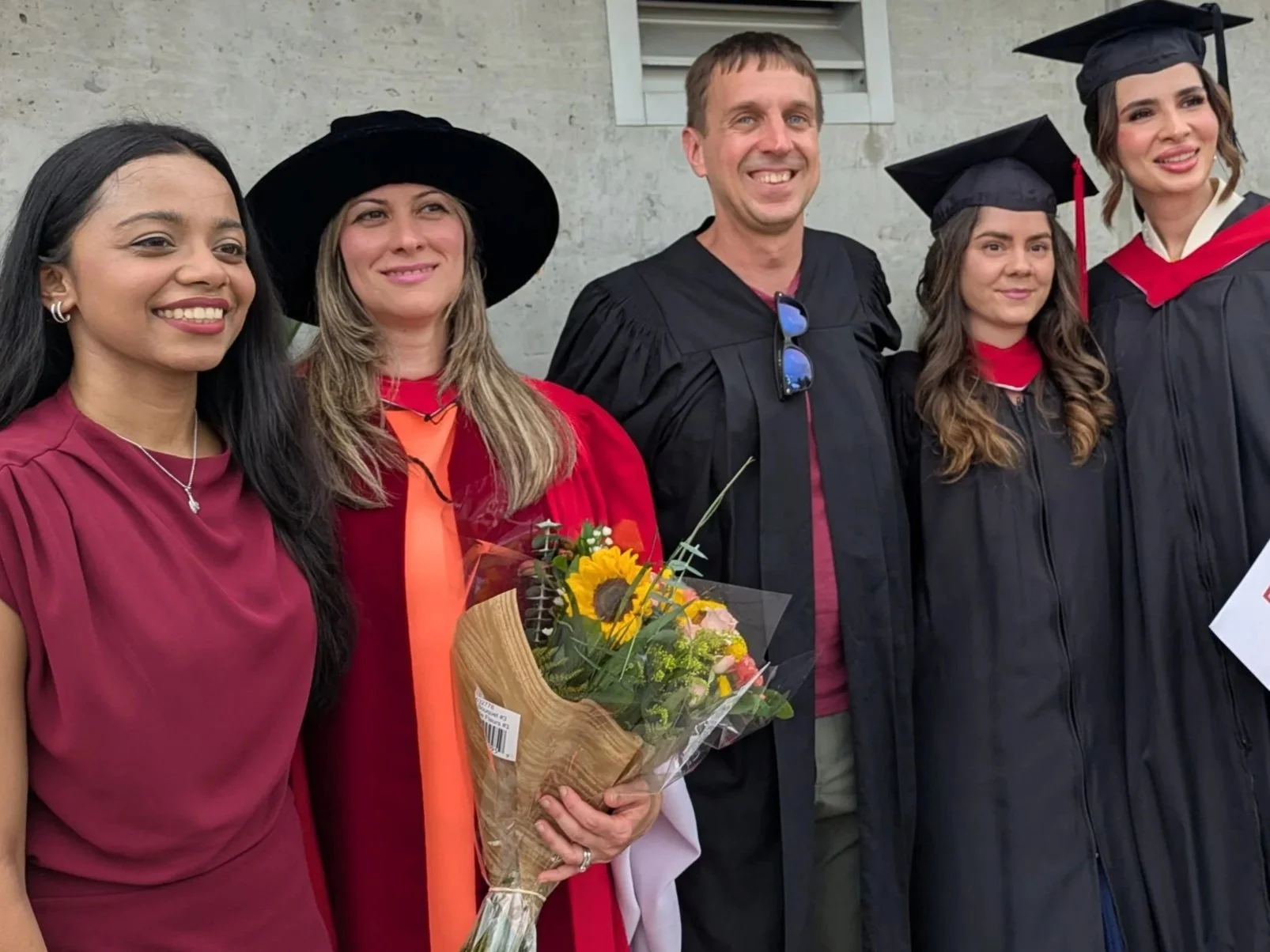
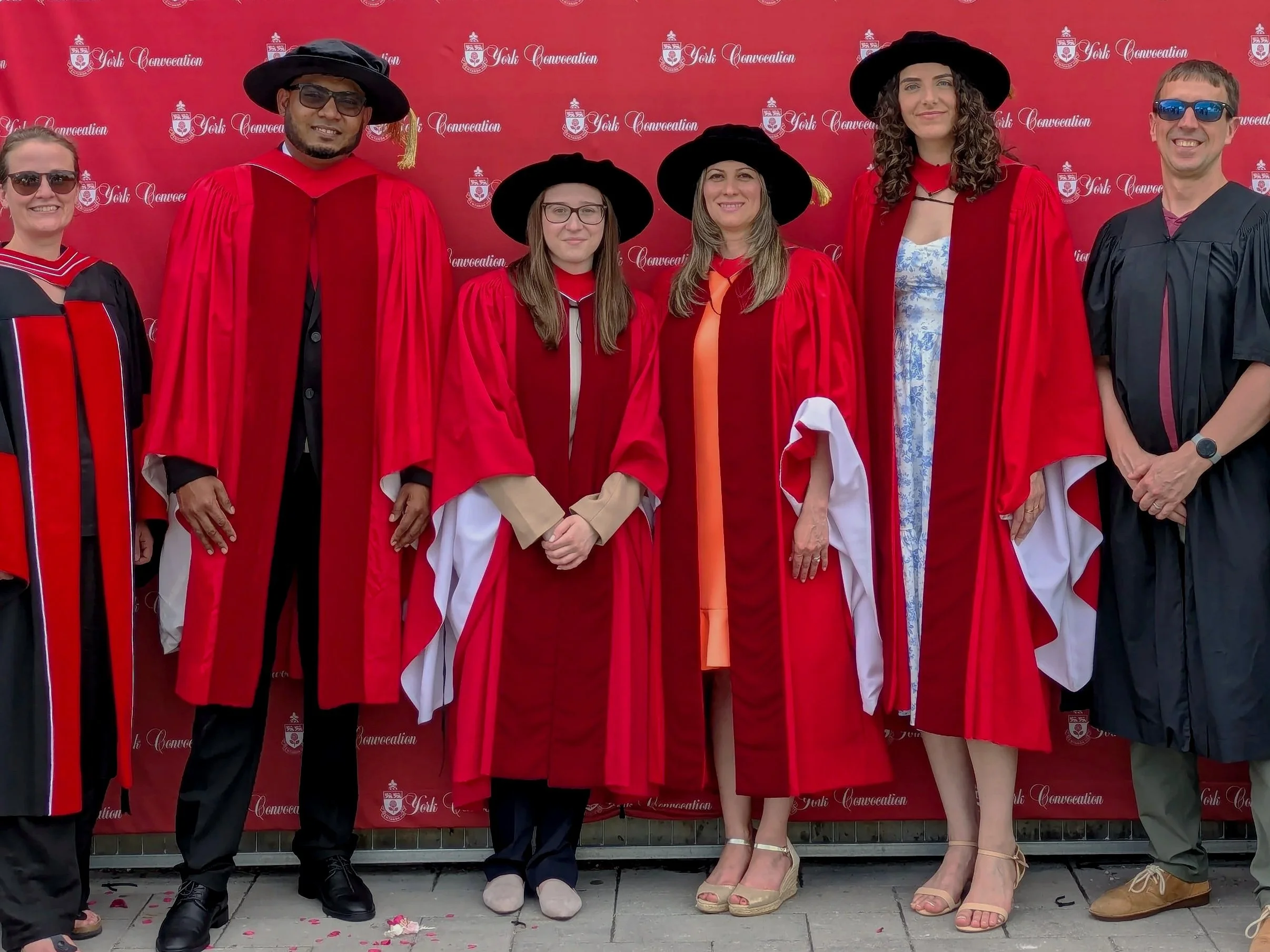
Convocation was a big day for the CJY and VDB Groups at York! Congrats to all our graduates spanning BSc (Dania) to MSc (Moxy and Irina) to PhD (Leyla and Alessia)!!!
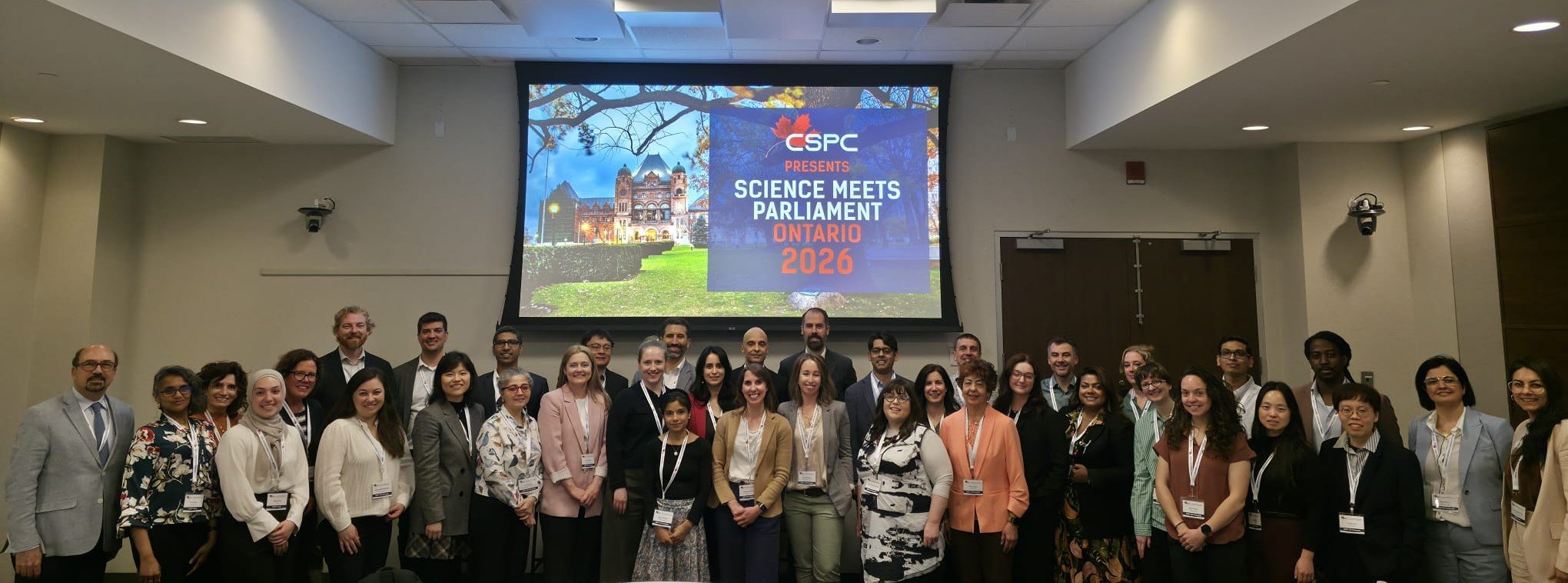
Trevor Delegated to Science Meets Parliament at Ontario Legislature
From May 4-6, the second gathering of Science Meets Parliament took place in Toronto where Trevor and other delegates from Ontario Universities met with Members of Provincial Parliament, Bureaucrats, and one another. The goal of this meeting was to foster connectivity and exchange of information around the policy-making process and was facilitated by the Canadian Science Policy Centre. It was a fantastic experience to connect with many like-minded academics and people throughout the public service, where fact-driven decision making is in demand!
Soil-Atmosphere Interactions of Reactive Nitrogen
Our collaborative work with Eosense, Inc. and Picarro to build the first dynamic chambers to simultaneously quantify Nr gases exchanged between soils and the atmosphere is now published! This was a massive team effort, spanning several years, to see this idea evolve from concept to implementation in both the lab and field. Congratulations everyone!!
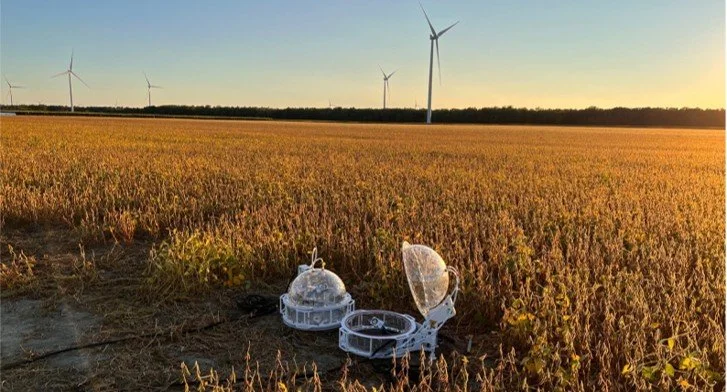
M. Shah, K. Aregahegn, D. Nodeh-Farahani, L. R. Crilley, T. Hasan, Y. Ebrahimi-Iranpour, F. Sarker, N. Nickerson, C. Creelman, S. Ellis, A. Moravek, T. C. VandenBoer*. Modification and validation of a commercial dynamic chamber for reactive nitrogen and greenhouse gas flux measurements. Atmospheric Measurement Techniques. 2026. 19:2379-2405
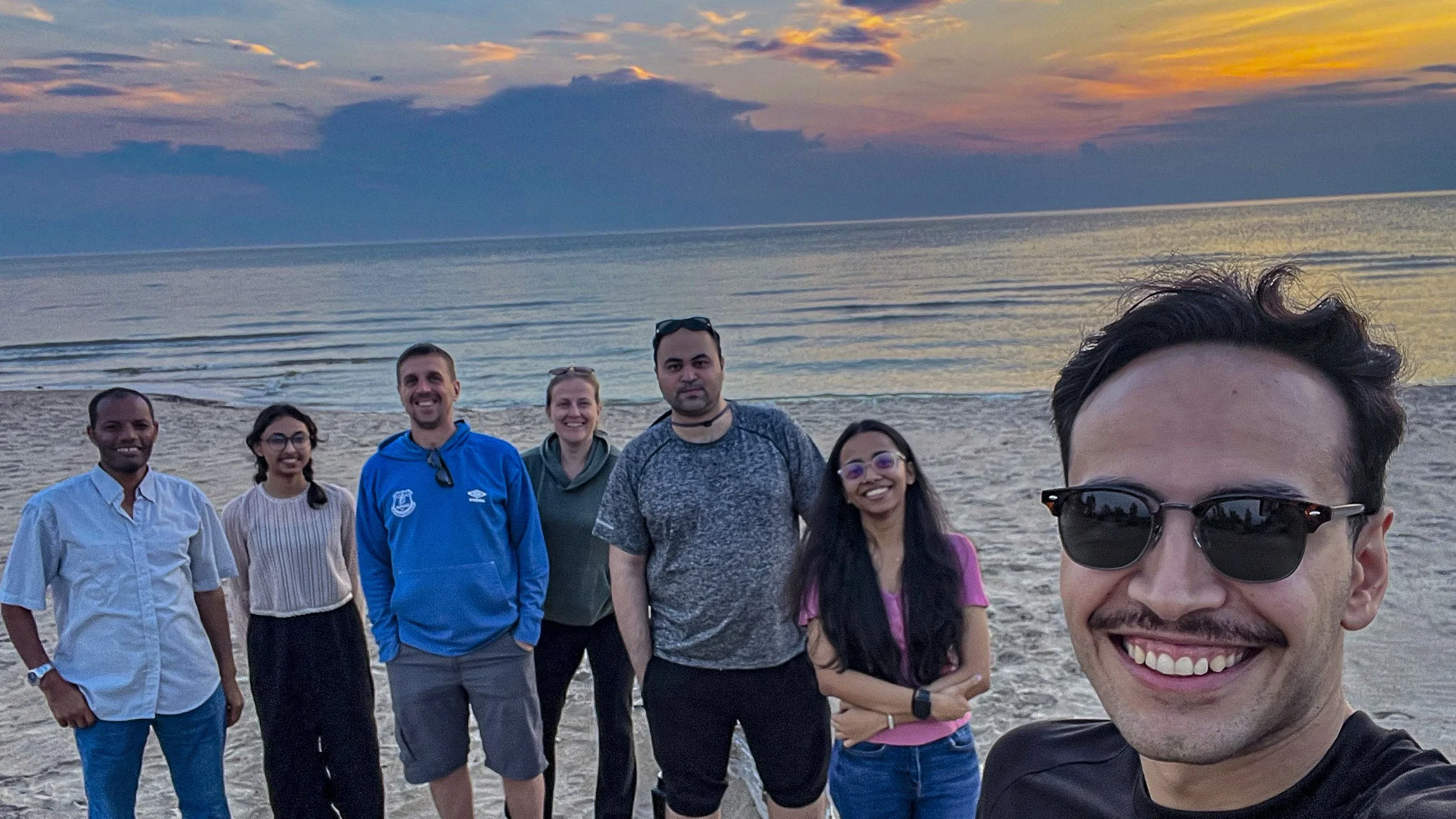
Fog-Aerosol Interactions and Chemistry at Sable Island and the Grand Banks
Our results from the Fog and Turbulence Interactions in the Marine Atmosphere (Fatima) campaign in the summer fog season of 2022 are now out in a special issue of the Quarterly Journal of the Royal Meteorological Society highlighting the science from this massive campaign! You can find our contributions in the papers below:
L. Salehpoor, L. R. Crilley, G. Giacosa, R. Y.-W. Chang, D. G. Ortiz-Suslow, Q. Wang, E. Creegan, H. J. S. Fernando, T. C. VandenBoer*. Microphysical chemistry of fog-aerosol interactions over the Northwest Atlantic Ocean during Fatima 2022. Quarterly Journal of the Royal Meteorological Society.
G. Giacosa, L. Robinson, D. G. Ortiz-Suslow, R. Yamaguchi, E. Creegan, P. Gauvin-Bourdon, L. Salehpoor, T. C. VandenBoer, Q. Wang, H. J. S. Fernando, and R. Y.-W. Chang*. Microphysics and interactions of aerosols and fog on the Northwest Atlantic Ocean. Quarterly Journal of the Royal Meteorological Society
And the overview paper from this campaign in the Bulletin of the American Meteorological Society:
H. J. S. Fernando*, C. Dorman, E. Pardyjak, L. Shen, Q. Wang, E. Creegan, S. Gaberšek, I. Gultepe, S. Hoch, L. Lenain, D. Richter, R. Chang, T. C. VandenBoer, S. Bardoel, A. Barve, B. Blomquist, T. Bullock, Z. Chen, L. Colosi, R. S. Coppersmith, I. Crawford, L. R. Crilley, R. Dimitrova, A. Dowling, D. Eleuterio, S. Fiorino, M. Gallagher, N. Gapp, G. Giacosa, A. Grachev, L. Grare, T. Hintz, C. Hocut, K. Y. Huang, O. Hyde, K. Keefer, D. G. Ortiz-Suslow, A. Perelet, W. Perrie, J. Ruiz-Plancarte, L. Salehpoor, D. Singh, N. Statom, P. Taylor, S. Wang, and R. Yamaguchi. Fatima-GB: Searching Clarity within Marine Fog. Bulletin of the American Meteorological Society (BAMS). 2025. 106(6): E971-E1016.
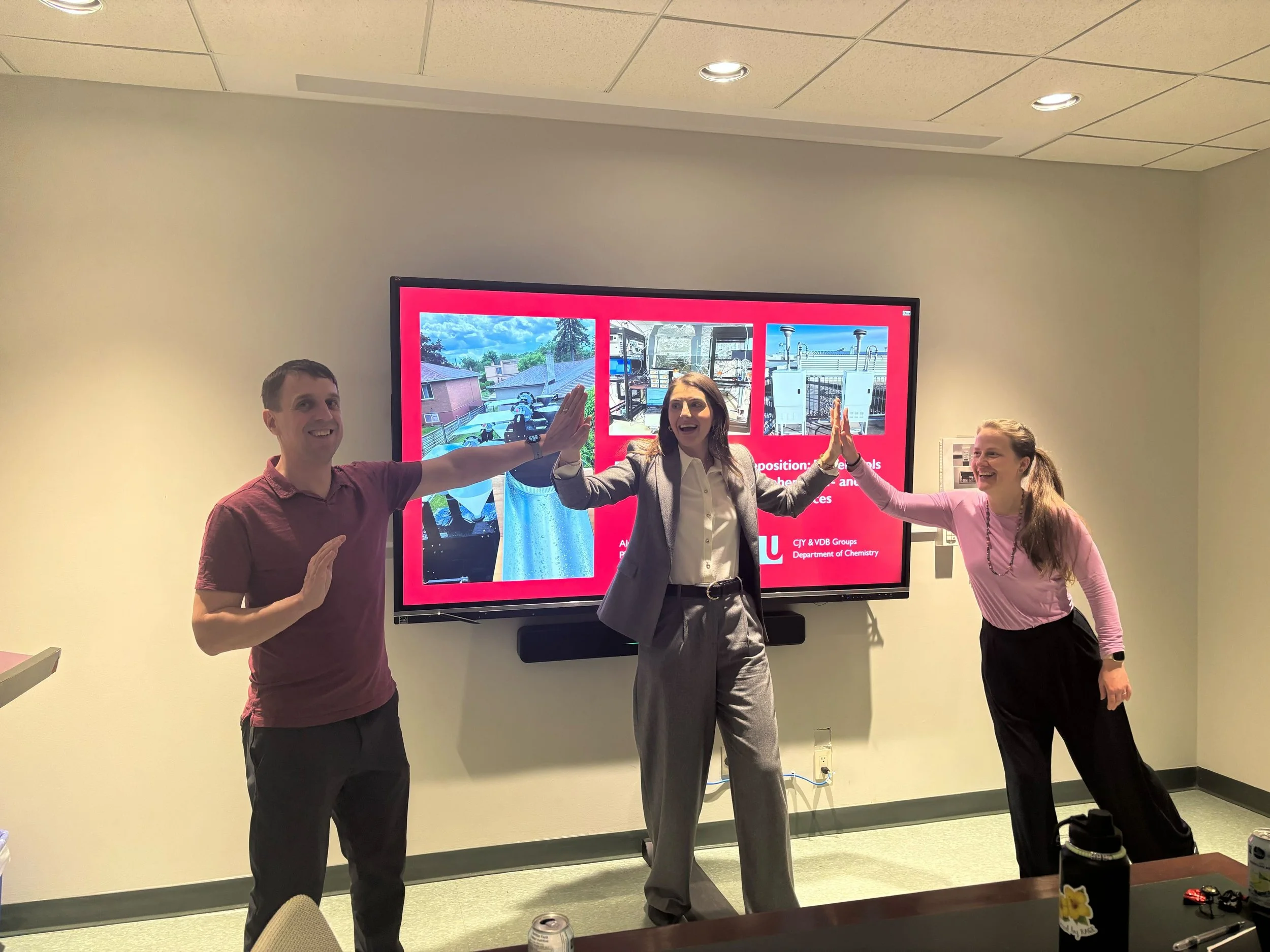
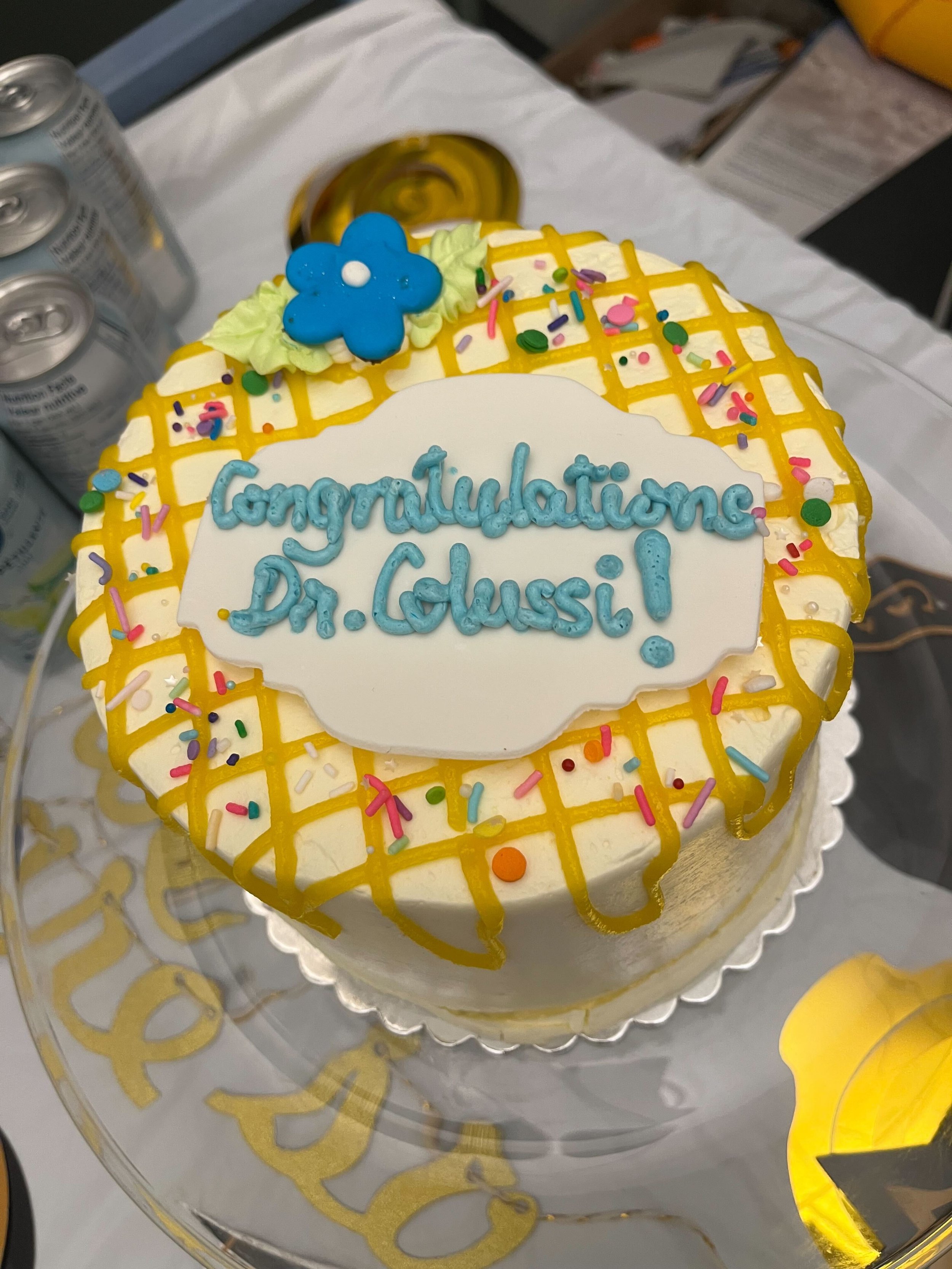
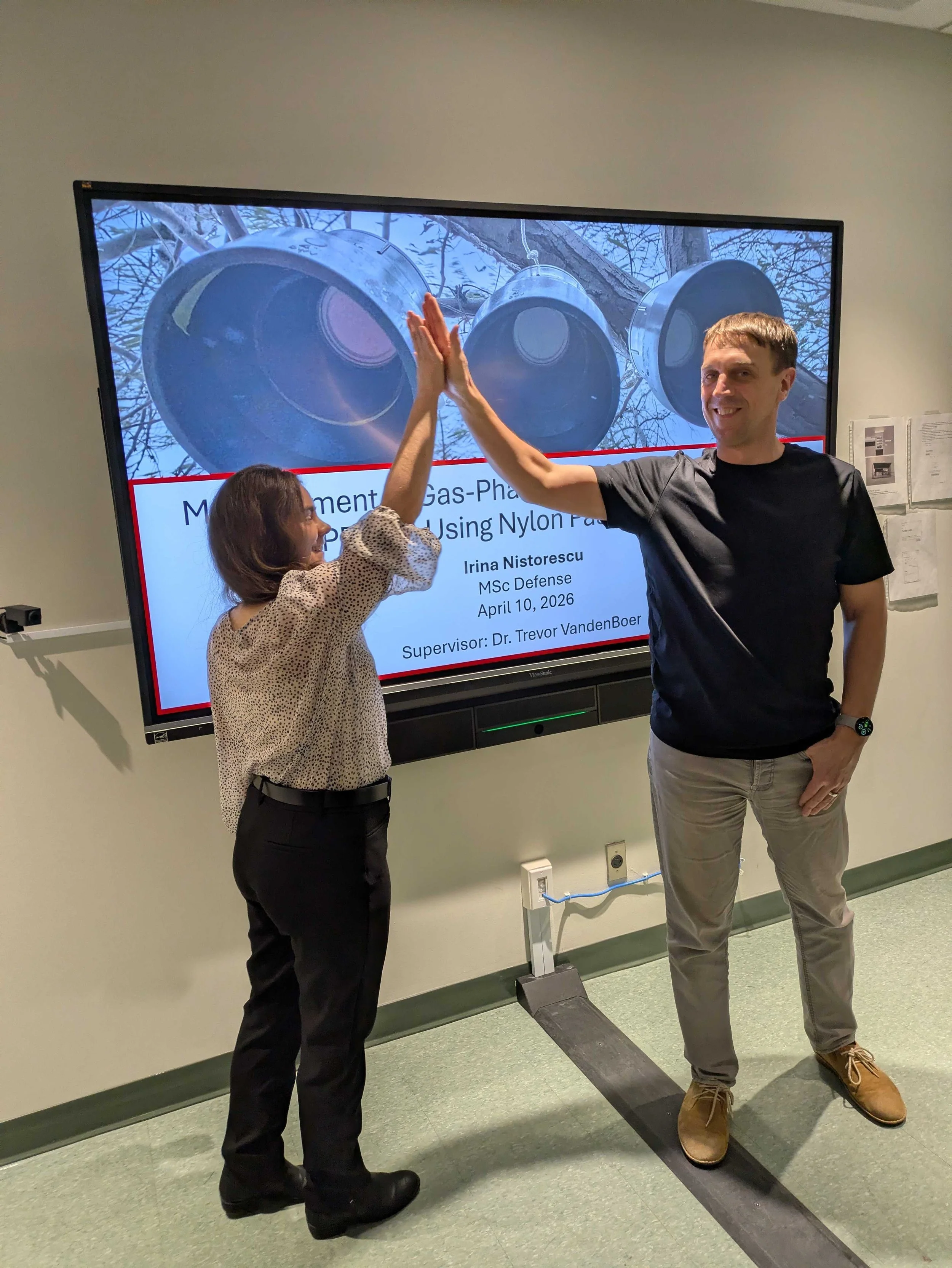
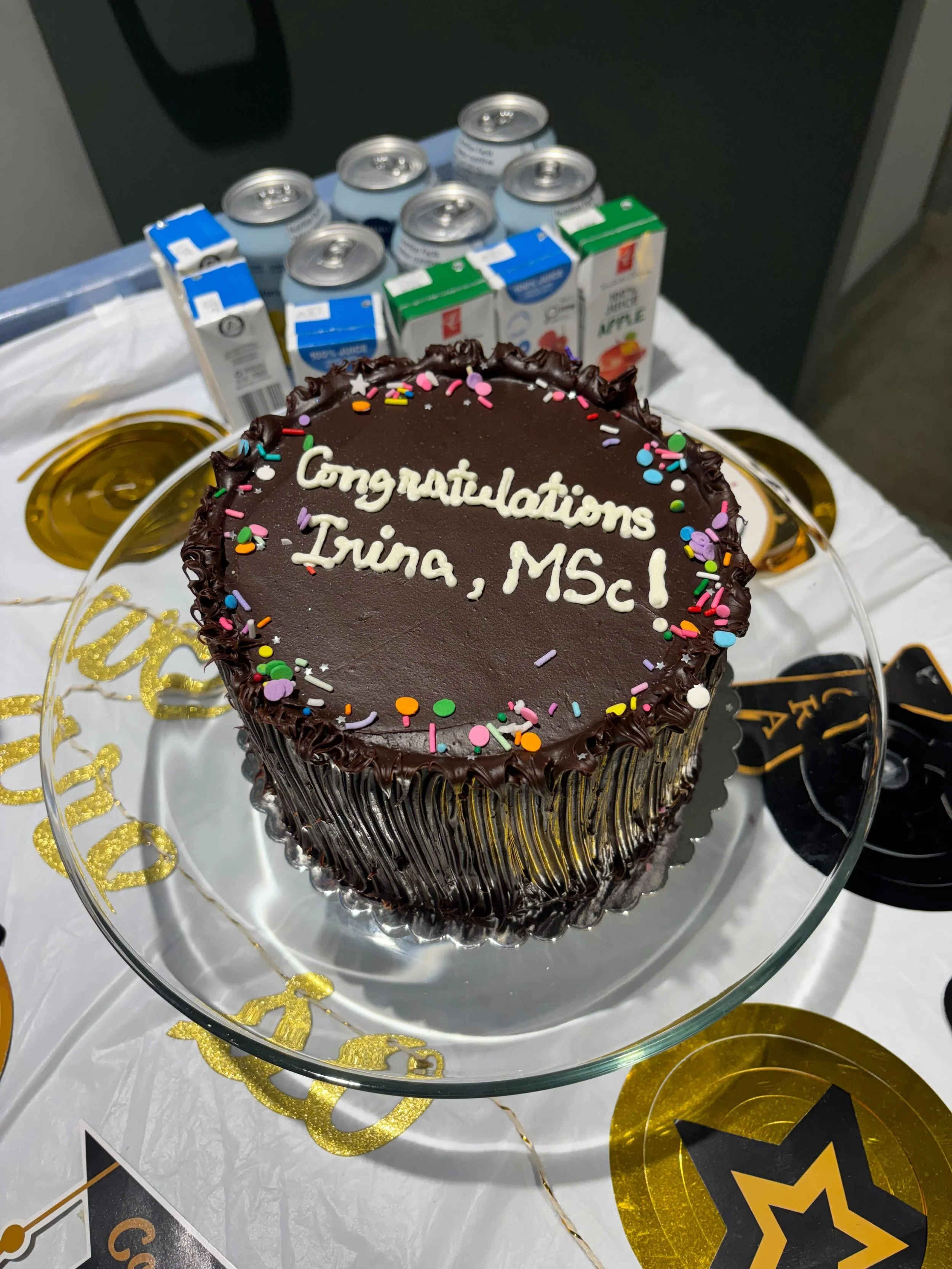
Graduates Galore! Congratulations Leyla, Alessia, and Irina!!!
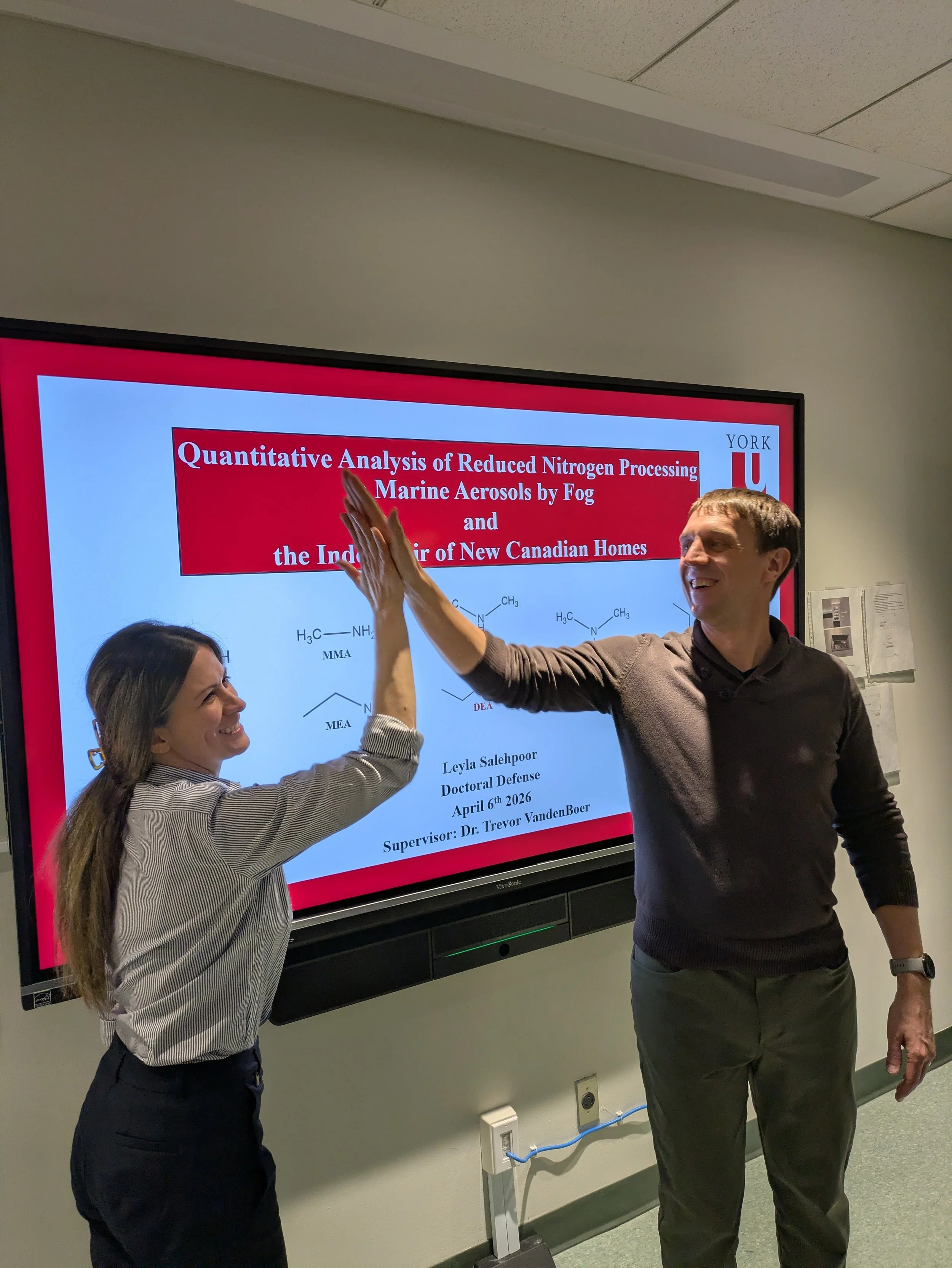
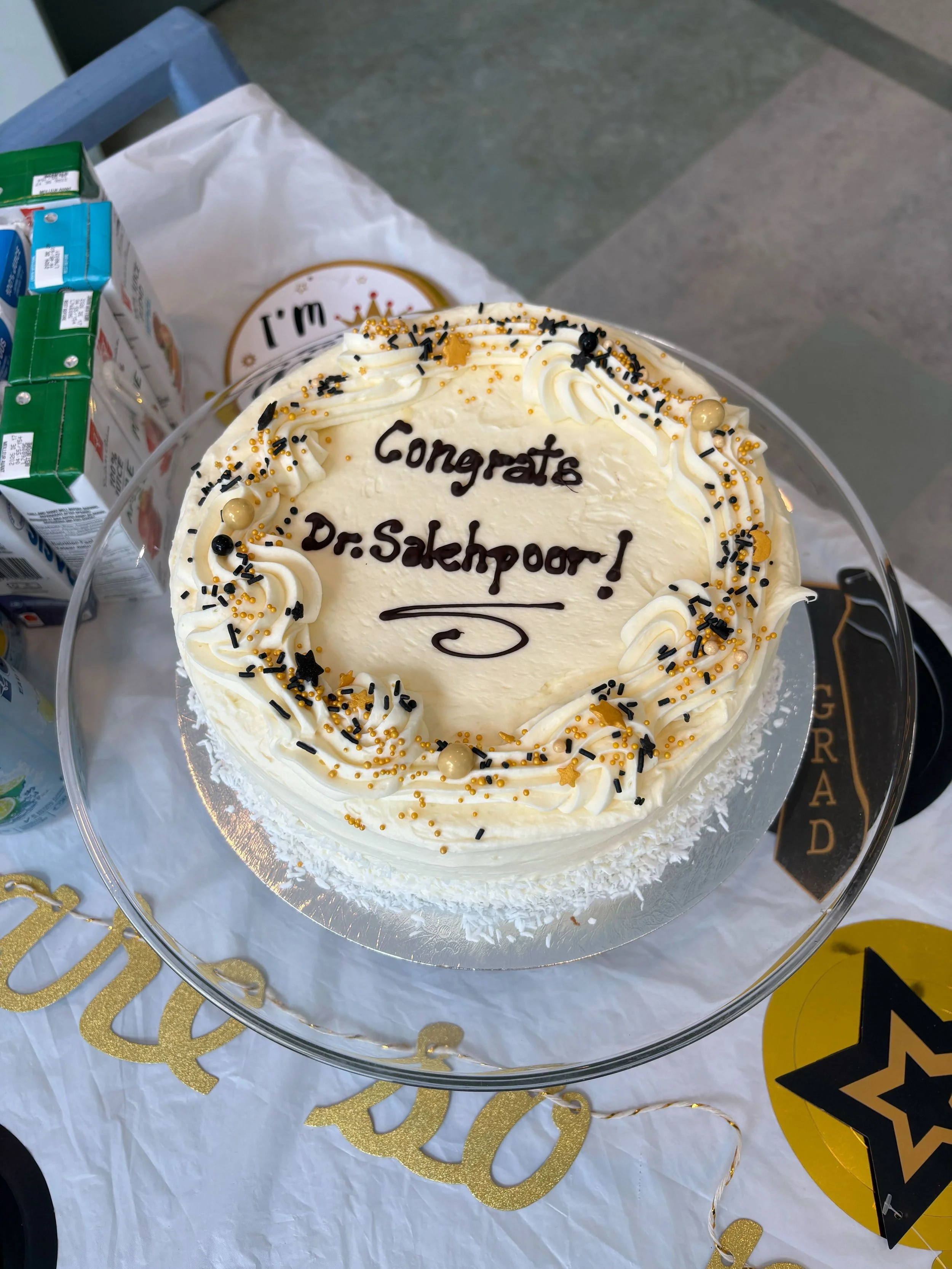
The past month has seen three new graduates complete their defenses and submit final dissertations or theses to complete their degrees in the group! Two are the first PhD graduates from the VDB Group and we are very proud of their accomplishments!! These were celebrated with our traditional high-five photos and cake!
Congratulations Leyla Salehpoor (PhD), Alessia Colussi (PhD - co-supervised with Cora Young), and Irina Nistorescu (MSc)!!!
Chlorine Chemistry Trio in Halifax and Toronto
Our past campaigns have looked at the influence of chlorine reservoirs on the potential chemistry of urban and marine (or both) atmospheres and three new papers explore these environments, with some focused results from summer AND winter chlorine chemistry in Toronto:
T. C. Furlani, E. M. McLay, A. Moravek, C. E. N. Power, A. Wiacek, R. Y.-W. Chang, T. C. VandenBoer*, and C. J. Young*. Reactive chlorine in the polluted marine boundary layer during the Halifax Fog and Air Quality Study (HaliFAQS). Environmental Science: Atmospheres
S. Joudan*, J. Liggio, J.J.B. Wentzell, J. Clouthier, N-Y. Seoh, P.M. Edwards, T. C. VandenBoer, C.J. Young*. Continuous measurements of atmospheric monochloroacetic acid: evidence of photochemical formation. Environmental Science & Technology Letters.
A. A. Angelucci, Y. Tao, T. C. VandenBoer, C. J. Young*. Exploring The Relationship Between Particle & Gas Phase Chlorine In Continental Winter. Journal of Geophysical Research: Atmospheres.
Three New PFAS Publications!
It’s been a while since our last PFAS update, as we’ve been working on a raft of publications to kick off 2026. We have three new manuscripts ranging from novel methodologies to study gas phase kinetics, to direct-inject PFCA separation methods for aqueous samples, and all the way to a multi-year depositional study of TFA in Toronto. You can check them out here:
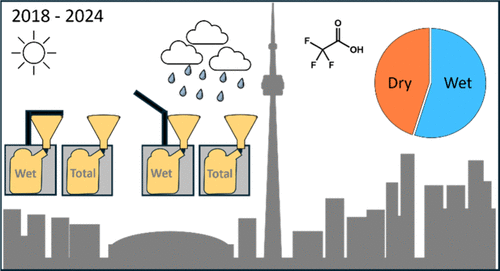
D. Persaud, S. Joudan, T. C. VandenBoer, C. J. Young*. Atmospheric removal of trifluoroacetic acid by dry and wet deposition: a multi-year analysis in Toronto. Environmental Science & Technology Letters.
J. Clouthier, T. C. VandenBoer, C. J. Young*. Direct-inject suppressed ion chromatography-mass spectrometry method with online preconcentration for short- and ultra short-chain perfluoroalkyl carboxylic acids in fresh water. Analytical Methods
A. A. Colussi, T. C. VandenBoer, J. Liggio*, C. J. Young*. Atmospheric fate of 4:2 fluorotelomer alcohol using an oxidation flow reactor and proton transfer reaction time-of-flight mass spectrometry. Environmental Science: Processes & Impacts
Atmospheric Passive Sampling of Perfluorinated Carboxylic Acids
Group members Eric (MSc graduate), Lindy (MSc graduate), Irina (current MSc researcher), and Leigh Crilley (past Research Associate) have developed a new passive sampling methodology for the acid degradation products of many volatile PFAS found in the atmosphere - perfluorinated carboxylic acids. This collaboration spanned the VandenBoer and Young Groups at York University as well as researchers at Environment and Climate Change Canada. It was published recently in the RSC’s Environmental Science: Processes & Impacts.
The developed method has ultra-trace detection limits at mixing ratios down to the parts per quadrillion level when deployed on the timescale of weeks. Using chemical selectivity via diffusion, these samplers can be easily deployed in a wide variety of atmospheres as they do not require electricity. We demonstrate their use in urban, rural, and remote atmospheres across Canada over two years.
https://doi.org/10.1039/D5EM00297D
YorkU Students Visit SCIEX
Chemistry students in the advanced analytical separation methods (CHEM 4080/5080) and mass spectrometry (CHEM 4081/5081) courses visited SCIEX last month as an experiential learning component of their studies at York University. SCIEX is a global leader in mass spectrometry instrumentation that got its start in Toronto. Their research and development facility is based in Concord, just a few kilometres from York University Keele Campus.
Students enjoyed lunch and snacks while learning about the history of SCIEX and some applications of their mass spectrometers. A graduate of York University shared her experiences in the company and how her university training in chemistry prepared her for a career at SCIEX and a career panel helped students to understand the different career paths available at an instrumentation company. Lastly, students toured the facility and learned more about the design of SCIEX mass spectrometers.
Thanks to the SCIEX hosts, Dr. Holly Lee (also Adjunct Professor, Department of Chemistry, York University) and Dr. Rob Di Lorenzo (graduate of Prof. Young’s research group), for putting together such a great event!

Reactive Nitrogen in a Commercial Kitchen
Our adventures in cooking continue with a new paper by Leigh (prior Research Associate) and Melodie (prior MSc) where we used our total gaseous nitrogen analyzer alongside a VOCUS PTR-MS to study the elemental budget of reactive nitrogen in a commercial kitchen! Check out the article here:
https://pubs.rsc.org/en/content/articlelanding/2025/em/d4em00491d